
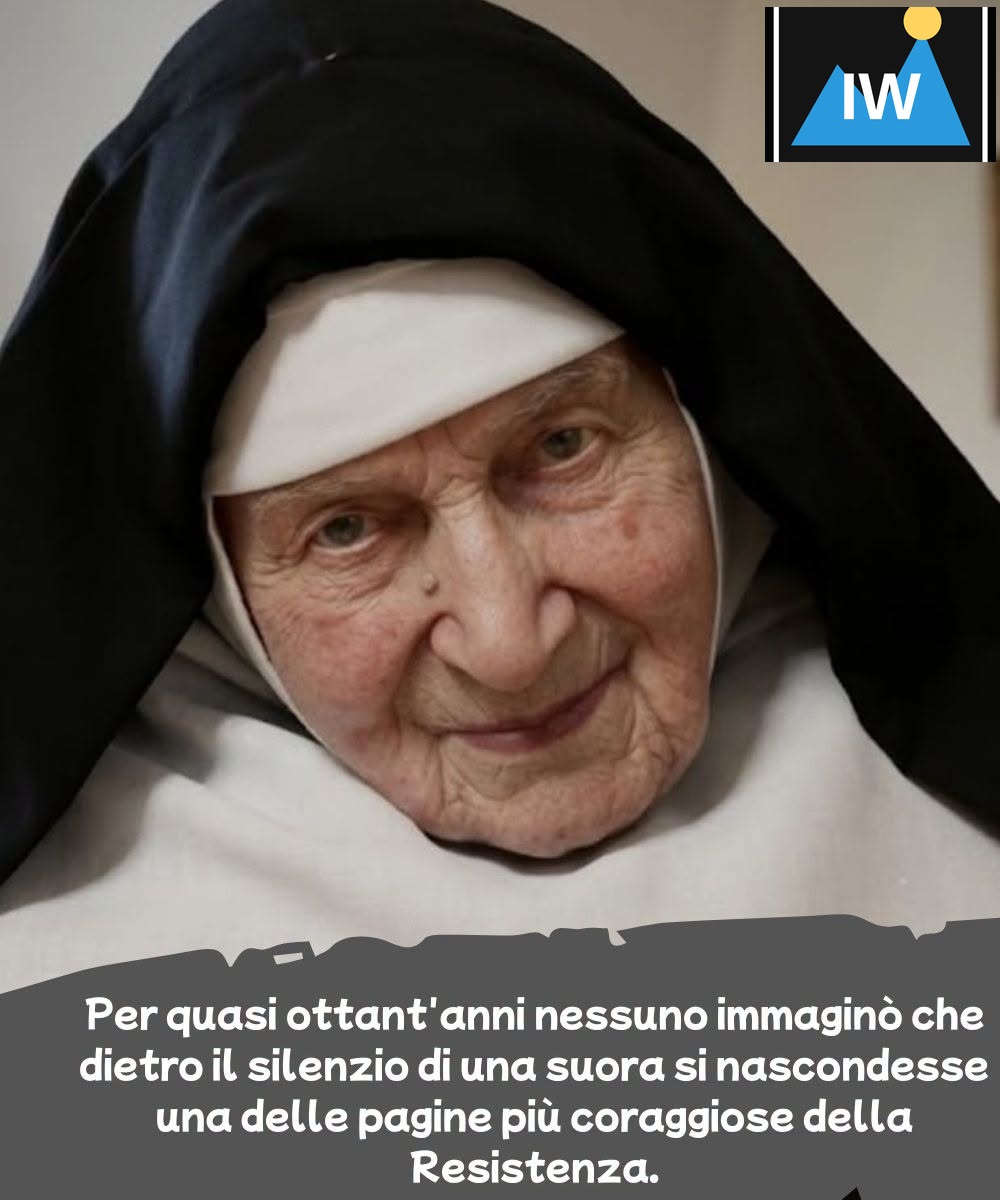
For almost eighty years no one imagined that behind the silence of a nun there was one of the bravest pages of the Resistance.
Sister Cecylia Roszak spent most of his life away from the spotlight. Entered among the Dominicans at only twenty-one years, he led a life made of prayer, work and discretion. Those who met her saw an elderly religious, always ready to play the organ during Mass or join the choir. Very few knew the choice he had made in the middle of World War II.
In 1941 he lived with other sisters near Vilnius, then one of the main centers of Jewish culture of Eastern Europe. The Nazi occupation quickly transformed that city into a place of persecution, deportations and massacres. Thousands of people were killed in the Ponary forest, while the survivors were locked up in the ghetto.
Among them was the young poet Abba Kovner. It was among the first to understand that it was not only about repression, but a project of extermination. Together with other boys he was looking for a shelter where to organize resistance. That shelter found it behind the walls of a convent.
The superior, mother Bertranda, decided to open the door despite the risk was huge. A search was enough to condemn all the religious. No hesitation, no condition: only welcome.
For months nine nuns and seventeen young Jews shared the same spaces, the little food available and especially the same danger. Sister Cecylia participated in that choice every day, keeping the secret and helping to protect those seeking a chance to survive.
It was in that convent that Abba Kovner wrote the appeal to enter history: «We do not go like sheep to the slaughter». Those words reached the Vilnius ghetto and became one of the symbols of Jewish resistance against Nazism.
In 1943 the Gestapo arrested mother Bertranda, the convent was closed and the religious were dispersed. Sister Cecylia returned to Krakow, choosing not to turn his past into a public account. He simply resumed his life, as if the courage shown was only a duty.
Only many years later came the recognition of Yad Vashem, who in 1984 declared her, along with the other religious involved, Law among the Nations. But what makes this story unique goes beyond any honor.
Sister Cecylia lived until 110 years and died in November 2018. At his funeral came a large bouquet of flowers sent by a Jewish woman who, when she was a child and had lost her parents, had been helped by her.
Perhaps this is the image that best tells his life: an open door when everyone else closed it. A gesture made in the silence that allowed other lives to continue and that, still today, remembers how a simple choice of humanity can change history.