
When a child reacts with rage, his behavior is often the last part of history.
The first is the emotion you are trying to express.
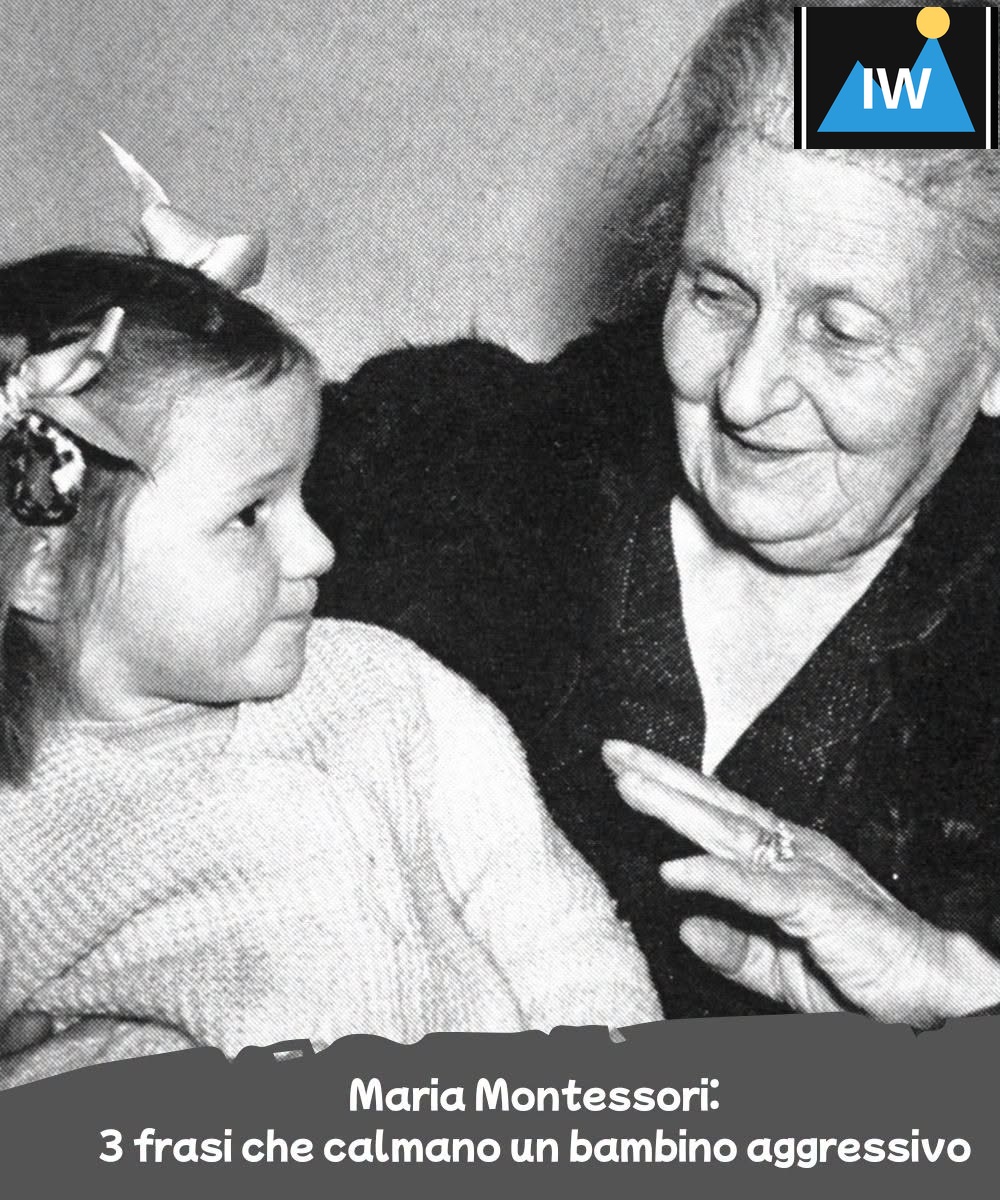
Maria Montessori has built its educational approach starting from a fundamental idea: to really help a child you must first observe it, understand it and respect its growth needs.
For this reason, in times of tension, the words of an adult can make a big difference.
Instead of responding immediately with a reproach, it can be useful to start by saying:
"I see you're very angry. You want to tell me what happened? "
A child who feels heard has more chances of finding calm and giving a name to what he feels.
When emotion begins to decrease, you can add:
"We try to find a solution together. "
So the child does not feel labeled for his behavior, but involved in finding a better way to deal with the situation.
Finally, a simple gesture can also help:
"Let's take a deep breath together. "
Children learn above all by observing adults. If they find in front of themselves a person capable of maintaining calm, they have more chances to develop, with time, the same self-control.
This does not mean ignoring aggressive behavior or renouncing to establish rules.
It means teaching that behind every emotion there is a space where you can learn, repair and grow.
Education does not just mean correcting what is wrong.
It means helping a child build the tools that one day will allow him to manage his own emotions.