
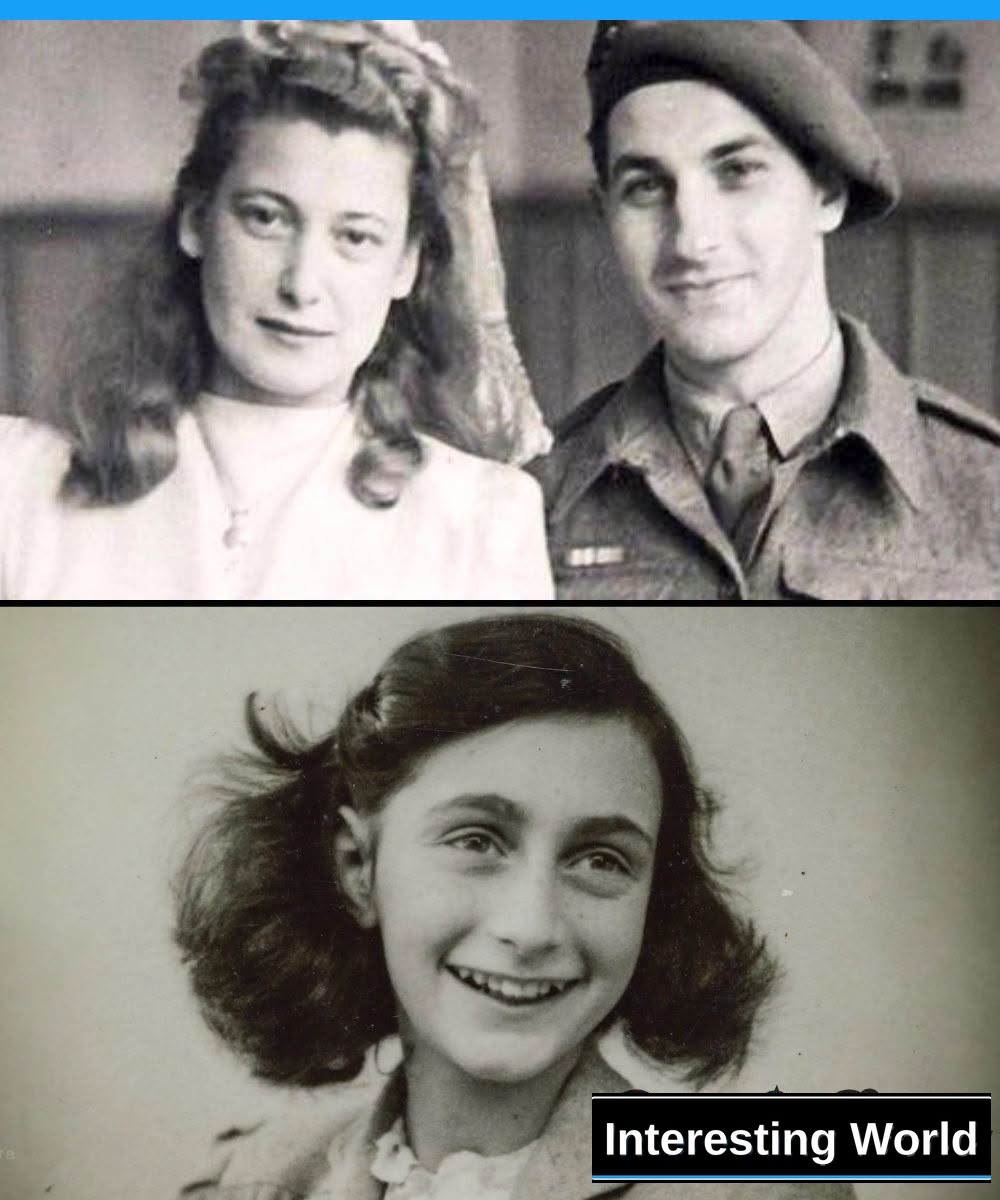
He thought that door would only be open to take the bodies away. Instead, when she opened up, she was still alive.
In the winter of 1944, at Auschwitz-Birkenau, Gena Turgel was together with hundreds of other women in a gas chamber. The doors of iron closed behind them and in the room a silence filled with fear. Everyone was convinced that the last moment of their lives had come.
They spent long minutes.
The whispered prayers slowly left room for waiting. But the gas never came.
Even today it is not possible to establish with certainty what happened. There are those who talked about a technical failure or organizational error. Gena, on the other hand, said he had always believed that it was a miracle. When the doors reopened, the guards found the women still alive.
For her, however, the nightmare was far from over.
He was later transferred to the Bergen-Belsen concentration camp, where hunger, disease and inhuman conditions continued to reap victims every day. It was there that he met a girl destined to become one of the symbols of the Holocaust: Anne Frank.
Anne was seriously sick of typhus. Gena said he had tried to relieve his sufferings as he could, bringing water, washing her face and staying next to her in the most difficult times, despite the risk of contagion. Years later he would recall above all his gaze, an image that never left it.
Liberation arrived on 15 April 1945, when British troops entered Bergen-Belsen.
Among the military were Norman Turgel, British intelligence officer. In a place devastated by the war a meeting was born to change the life of both. A few months later they married.
Her wedding dress became the symbol of a rebirth. It was packaged using the silk of a British army parachute, transforming a war instrument into a sign of hope. Still today, that dress is preserved at the Imperial War Museum in London.
Gena Turgel lived until the age of 95, devoting much of his existence to telling young people what he had lived during the Holocaust.
He didn't talk to feed hatred.
He spoke so that the new generations understood how fragile human dignity, freedom and peace are. His story continues to recall that, even in the darkest moments of history, there are those who chose never to stop making a gesture of humanity towards others.